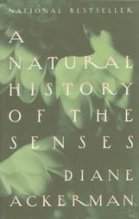
One of the earliest written documents on smell is a treatise known as De Odoribus, commonly attributed to Theophrastus of Athens (ca. 372 – ca. 287 BC). It dates back to the times when men wore white tunics, and sat under olive trees to ponder about life. Nature was a mysterious thing, and making sense of it (!) was based on experience rather than experiment. Although our outlook on Life and Nature has changed drastically over the course of centuries, we can still relate to the naturalist approach practiced in Ancient Greece. The huge popularity of Diane Ackerman’s Natural History of the Senses is a case in point…
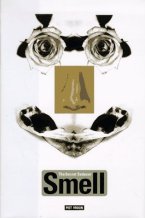 There's only a handful of comprehensive books on the psychology of smell; one of them is Smell: The Secret Seducer by Piet Vroon. It was originally published in Dutch in 1994, and the English translation is now almost ten years old. I included it in my list of
 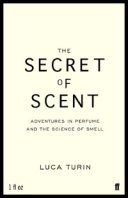 Understanding how smell works is a bit like trying to fix a radio, with the premise that a) you have little knowledge of its components, and b) the darn thing didn't come with a wiring diagram. For seven decades, scientists have explored the various components of the olfactory system, and how they are connected to each other. But despite their hard work, the fundamental question has remained unanswered: how does our nose 'read' odorant molecules? Biochemist and perfume connoisseur Luca Turin thinks he cracked the code, and wrote a book about it: The Secret of Scent.