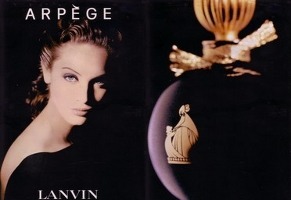
In 1927, Jeanne Lanvin asked André Fraysse to create a perfume for her daughter’s 30th birthday. Fraysse was only 27 years old, but with Paul Vacher’s help he created what is often recognized as the second great aldehydic floral fragrance, and one of the five most esteemed in the world: Arpège.
Hubert Fraysse reformulated Arpège in 1993. I haven’t smelled the original Arpège, but the consensus seems to be that the reformulation is a respectful play on the original. Combining Osmoz and Basenotes’s information for the newest version of Arpège yields topnotes of aldehydes, bergamot, neroli, and peach; a heart of jasmine, rose, lily of the valley, ylang ylang, coriander, and tuberose; and a base of sandalwood, vanilla, tuberose, vetiver, patchouli, and styrax.
Where Chanel No. 5 is languid, Arpège is full-bodied. If No. 5 is a vase of summer flowers, then Arpège is that same vase three days later, flowers ripe and spicy, with a dirtier base…
 I love summer, with its early morning clear light that quickly turns hazy and warm. Golden hot sun bakes the patio and there is a constant buzz in the air from the bees making their rounds through vividly colored snapdragons, larkspur, day lilies and hollyhocks in the garden. The work pace slows down, water cooler breaks are more frequent, with perhaps even an afternoon espresso break allowed this time of year — a nod of thanks to our European friends across the pond.
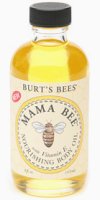 Burt’s Bees, one of the longer-established natural body-care companies, has been introducing new products at a fast and furious pace lately. As a companion group to the popular Baby Bee line for infants and small children, the Mama Bee line has recently emerged. Although they are ostensibly tailored for expectant and new mothers, the Mama Bee products are suitable for adults of any parental or non-parental status, and gentle enough for children themselves.