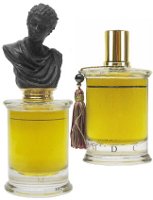
French niche line Parfums MDCI has launched Chypre Palatin, a new green oriental chypre developed by perfumer Bertrand Duchaufour…
French niche line Parfums MDCI has launched Chypre Palatin, a new green oriental chypre developed by perfumer Bertrand Duchaufour…
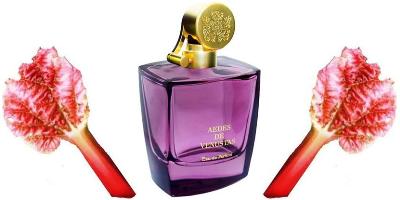
Ever since it opened shop in New York City, Aedes de Venustas has had a special place in my perfume-loving heart. I remember the old days when I’d anxiously await the arrival of the always-beautiful Aedes de Venustas catalogues and then figure out what perfume(s) and soaps and candles I couldn’t live without (the intervening 17 years have taught me I can live without just about everything!) I introduced “legions” to the store and online boutique by saying, around birthday-time and Christmas (in wording that varied): “A present for ME? There’s no need! Weeeeell, I love just about everything at (you guessed it) Aedes de Venustas.” Now Aedes de Venustas has launched a new fragrance called Aedes de Venustas Signature Eau de Parfum (not to be confused with the L’Artisan Parfumeur Aedes de Venustas fragrance.)
Bertrand Duchaufour, the perfumer of L’Artisan Parfumeur’s Aedes de Venustas, developed Aedes de Venustas Signature, too; it has fragrance notes of rhubarb, tomato leaf, red currant, green apple, honeysuckle, vetiver, hazelnut and incense.
Aedes de Venustas Signature begins with a tangy, green/fruit accord: a “hot,” rough tomato leaf scent combined with musky currant, a quick burst of apple, and rhubarb. Let’s stop right here and talk “rhubarb”…
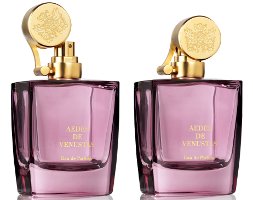
West Village niche perfume boutique Aedes de Venustas has launched an eponymous fragrance under their own brand name. A prior fragrance, also called Aedes de Venustas, was made for the L’Artisan Parfumeur label. The new chypre scent was developed by perfumer Bertrand Duchaufour, who also did the fragrance for L’Artisan…
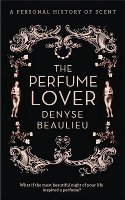

An often-cited quote asserts that “writing about music is like dancing about architecture.” Substitute “perfume” for “music,” and you get an idea of the challenge perfume writing presents. To communicate how a fragrance smells, a writer often draws from stories, memories, and senses other than smell to evoke perfume’s deep and broad impact. Denyse Beaulieu does all that and more as she tracks the development of Séville à l’aube, an upcoming perfume release by L’Artisan Parfumeur. The result, The Perfume Lover, is a passionate and insightful story not just about the development of a single fragrance, but about how perfume has infused Denyse’s own life. If you enjoy Denyse’s perfume blog, Grain de Musc, you’ll want to read The Perfume Lover.
I consider Denyse a friend, so to avoid a conflict of interest, rather than write a traditional review of The Perfume Lover, I present a handful of questions about the book and Denyse’s responses. Denyse will be checking in, so if you’d like to add your own questions you can leave them in comments.
The Perfume Lover is an unusual combination of memoir, perfume history, and the story of the development of a single fragrance. What led you to choose this format?
I’d say the format chose me…
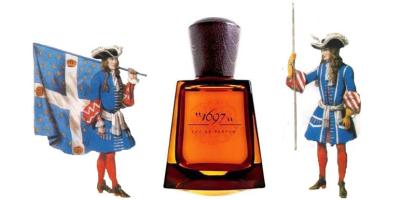
The Frapin line of fragrances has (somehow) escaped my attention; blame it on a flooded market, a lack of time and energy to find samples, or being in a perfume-induced stupor: “No more perfumes! Enough!” So: a year after its introduction, I’m finally sniffing 1697 (named after the year the Frapin family was ennobled by Louis XIV).
1697 was created by perfumer Bertrand Duchaufour and includes notes of cabreuva, dark rum, acacia, davana, pink pepper, jasmine, hawthorn, ylang ylang, cloves, cinnamon, sweet dried fruits accord, rose, ambergris, myrrh, tonka bean, patchouli, cedar, cistus labdanum, white musk and vanilla.
When first applied, 1697 smells of wine/brandy, then “rum cask;” as this brash, fumy liquor accord subsides…