You can watch a brief piece on perfumer Jean Claude Ellena on France3 (in French, obviously). Choose the broadcast from March 21, and then go to the last segment of the show. Thank you to Anya for the link!
Next fragrance review: Monday.
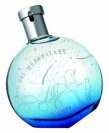 I am off for a little weekend trip. Hope to possibly work in a little perfume shopping along the way...
Meanwhile, here is a picture of my most recent object of perfume lust: Hermès Eau des Merveilles Constellation. According to most of the reports I've read, the juice is exactly the same as the regular Eau des Merveilles, but the bottle is very, very tempting. Please comment if you've tried it: is the fragrance any different? Update: it has been established that the juice is the same.
Otherwise, my "dying to try" list is unusually short this year. What's on yours?
Guess Man & more new fragrances
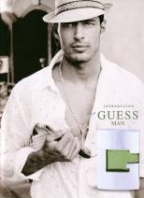 The next fragrance launch from Guess, Guess Man, is due next month:
Guess Man, which was blended by Steve DeMercado of Fragrance Resources, features olfactory accords of Siberian blue fir, Peru balsam, Egyptian sandalwood, spiced amber, brushed suede and musk…
Perfume books ~ The Foul and the Fragrant: Odor and the French Social Imagination by Alain Corbin
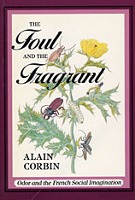 The last two books we’ve discussed (Classen’s Aroma and Süskind’s Perfume) give a good impression of the malodors that infested the streets of 18th century Paris, and of the negative connotations attributed to smell since the Enlightenment. Alain Corbin’s The Foul and the Fragrant fits well in this context, as it explores the relation between odors and hygiene in 18th and 19th century France. It traces back the social history of smell, particularly in the French capital, with the aim to better understand the “deodorized” world in which we live today.
Ever wondered how we ended up being so intolerant towards stench and body odor? You may think the answer lies in the invention of modern hygiene and deodorants, but according to French historian Alain Corbin, things are not that simple. Indeed, we sometimes forget just how radically science has changed our outlook on Nature in the past centuries; what looks obvious to us, may have been inconceivable to our ancestors. The Ancient Greek’s assumption that air, fire, water, and earth are the primordial elements of life serves as a small reminder: it wasn’t until the second half of the 18th century that Empedocles’ ideas were debunked by empirical science (think of Joseph Priestley, Antoine Lavoisier, Joseph Louis Gay-Lussac, John Dalton, Amedeo Avogadro).
Taking this into account, it’s hardly surprising to see how the concept of “bad air” meant something very different to people in 1750 than it does nowadays…
Serge Lutens Douce Amere ~ fragrance review
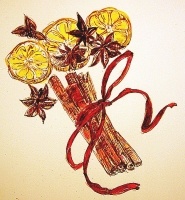
Douce Amere was launched by Serge Lutens in 2000. The fragrance is described as a “fresh oriental”, and features notes of cinnamon, artemisia absinthium, anise, lily, jasmine, tiare flower, tagette, cedar, musk. The perfumer was Christopher Sheldrake.
Douce Amere is to my mind one of the glories of the Serge Lutens line. It centers on artemisia absinthium, the bitter herb also known as wormwood and famous as the source of the liquor absinthe. The fragrance starts with a brief flash of lemony citrus generously dusted with cinnamon: it is strong, and candy-sweet. The wormwood lends a bitter-green medicinal edge to the top notes, but it softens nicely as it dries down to something more like a milky pudding laced with black licorice, mildly spicy, with abstract floral notes and vague hints of something that smells very much like chocolate. It has a velvety finish, and a pale wood base…